
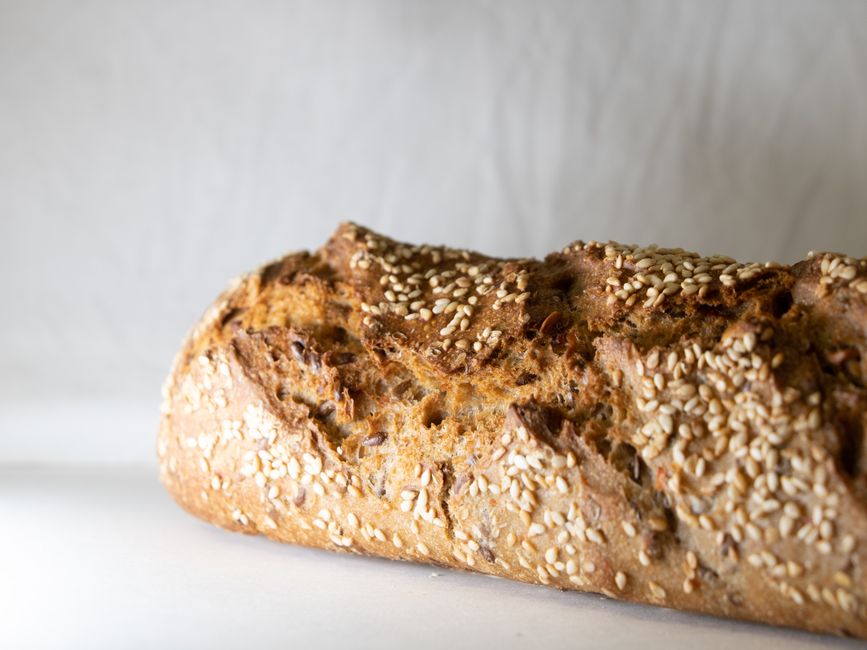
Overview
Homemade quinoa bread belongs to the grains & starches group in this encyclopedia. At the well-controlled level it carries a "Use caution" rating, though — as with most foods — the sensible portion shrinks as blood sugar control loosens. The calories and macronutrients below come from a nutrition database. The ratings and portion sizes are our own estimate, derived from this item's carbohydrate content, fibre, food type and physical form — whether it is eaten or drunk — together with established diabetes nutrition principles. They were not taken from the source medical reference, and no glucose response has been measured for this food. Treat them as a starting point for planning, and always confirm the right amount for you with a nutrition label or your diabetes care team.
Calories & Nutrition
Homemade quinoa bread provides about 368 calories per 100 g. It contains roughly 64 g of carbohydrate per 100 g, which is the figure that matters most for blood sugar planning.
Carbohydrates & Blood Sugar
After a meal, carbohydrate is broken down to glucose and absorbed into the blood; insulin then helps move it into cells. Foods that release glucose slowly produce a smaller, steadier rise.
Homemade quinoa bread's higher fibre content slows starch digestion, producing a more gradual glucose rise than a milled, refined equivalent.
Counting carbs is easier when you have the right tool.
Suggested Serving Size
The table below shows the estimated impact and a sensible portion of Homemade quinoa bread at each of the three diabetes control levels used throughout this encyclopedia. These are estimates derived from the food's carbohydrate content, fibre, category and physical form, together with established diabetes nutrition principles — not measurements of anyone's glucose response. Treat them as a starting point for planning rather than a fixed rule.
Foods are rated across three diabetes control categories — find the row that matches your HbA1c or fasting blood sugar:
| Control level | Safety rating | Suggested portion |
|---|---|---|
| Well-controlled HbA1c ≤ 6.5% (or fasting glucose 110–140 mg/dL) | Use caution | about 47 g |
| Moderately controlled HbA1c 6.6–8.5% (or fasting glucose 141–180 mg/dL) | Use caution | about 31 g |
| Poorly controlled HbA1c > 8.5% (or fasting glucose > 180 mg/dL) | Use caution | about 16 g |
Portion Calculator
See the carbs for any portion size:
57.6 g of carbs in that portion
How you use the portions below depends on your type of diabetes:
If you have type 1 diabetes, you are the one dosing insulin — so count the carbohydrates. Use the carbohydrate figure and the portion shown to match your insulin to the meal, and confirm doses with your care team.
If you have type 2 diabetes, be careful with the amount and follow the safe portion for your control level. The safe quantity shrinks as blood-sugar control loosens — use the row that matches your HbA1c or fasting sugar.
You know the portion. Now understand how it fits into your insulin decision.
Safety for Diabetics
Homemade quinoa bread is rated "Use caution" even at the well-controlled level, meaning it calls for real caution regardless of how well blood sugar is currently managed. Smaller portions, pairing with fibre or protein, and checking your response afterwards are sensible precautions.
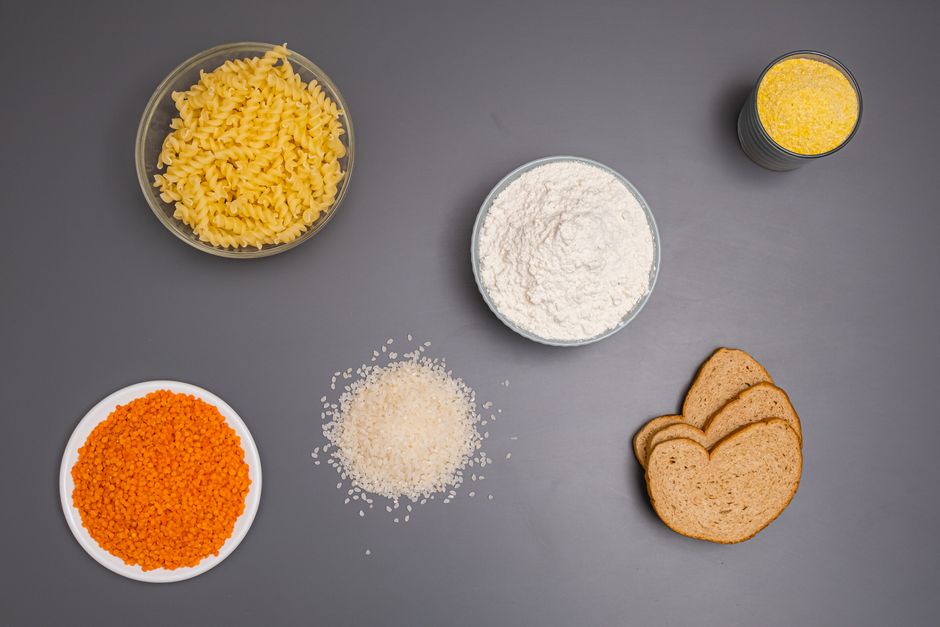
Group-level caution: Instant noodles and fried or frozen-then-fried potatoes are best avoided. Boiled or baked potato, Egyptian or basmati rice, bulgur, freekeh, and brown, white or barley bread should be treated with real caution and kept to small portions.
Beyond blood sugar
Carbohydrate is not the only thing on this page worth a look:
- It is energy dense at about 368 calories per 100 g — relevant if weight is part of what you and your care team are working on.
Blood Sugar & Insulin Considerations
Every food that raises blood sugar also has some bearing on insulin needs, whether that insulin comes from your own pancreas or an injection. Rather than memorising numbers for every food, many people find it easier to lean on a tool at the moment of eating. This is exactly the gap Flona is built for: it helps estimate the carbohydrate in a portion like the one above and supports your insulin decision — basal, rapid-acting, mixed or meal-based — without replacing the judgement of your physician or diabetes care team.
Controlling Your Blood Sugar with Homemade quinoa bread
A few simple habits can change how Homemade quinoa bread behaves in your blood sugar, without cutting it out of your diet entirely.
Homemade quinoa bread is a reasonable everyday base precisely because the intact bran and fibre slow things down; keeping the portion measured still matters, but less urgently than with a refined version of the same grain.
Practical steps to keep your blood sugar steady
- Choose Homemade quinoa bread over a refined equivalent as one of the simpler everyday swaps available.
- Keep the portion measured, even though the response is gentler than a refined grain.
- A flavoured instant oatmeal packet often has more added sugar and less intact grain structure than a plain, slower-cooked Homemade quinoa bread, so it behaves closer to a refined cereal than the name suggests.
- Measure Homemade quinoa bread after cooking rather than by the dry cup, since a grain like quinoa or bulgur expands to several times its dry volume.
- Add a fibre-rich side, such as a salad or non-starchy vegetables, to blunt the speed of the glucose rise.
- Keep the portion measured (a kitchen scale or measuring cup helps) rather than estimating visually — carbohydrate is easy to underestimate by eye.
With Homemade quinoa bread in particular, stacking two or three of these habits together (rather than relying on just one) is what tends to keep the post-meal rise manageable.
Scientific Explanation
Because milling has not stripped away the outer layers of Homemade quinoa bread, the fibre content stays high, and that fibre both slows digestion directly and feeds gut bacteria in ways that can influence glucose handling over time.
Tips
- Stick close to the portion shown for your control level (about 47 g at well-controlled) rather than estimating by eye.
- Pair Homemade quinoa bread with a source of fibre or healthy fat to slow the rise in blood sugar.
- Check your blood sugar after trying a new portion for the first time, so you learn your own response rather than relying on averages.
- Consider a lower-carb swap from the same food group on days blood sugar is already running high.
- Track how Homemade quinoa bread affects you over a few occasions rather than judging from a single reading.
Frequently Asked Questions
Is Homemade quinoa bread safe for diabetics?
At the well-controlled level, Homemade quinoa bread carries a "Use caution" rating at the portion shown above. Caution increases as control worsens, so check all three tiers before deciding.
How much Homemade quinoa bread can a diabetic eat?
At the well-controlled level, the suggested portion is about 47 g. Portions shrink at the moderate and poorly controlled levels — see the table above for the exact amount at your level.
Does Homemade quinoa bread raise blood sugar?
Yes, to some degree — Homemade quinoa bread contains about 64 g of carbohydrate per 100 g, and carbohydrate is the main driver of a post-meal glucose rise. How much it raises your blood sugar depends on the portion eaten and your individual response.
How can I keep my blood sugar steady after eating Homemade quinoa bread?
Two things help most with Homemade quinoa bread: choose Homemade quinoa bread over a refined equivalent as one of the simpler everyday swaps available, and keep the portion measured, even though the response is gentler than a refined grain. Responses vary between people, so check your own glucose after eating it a few times rather than relying on averages.
Comments