
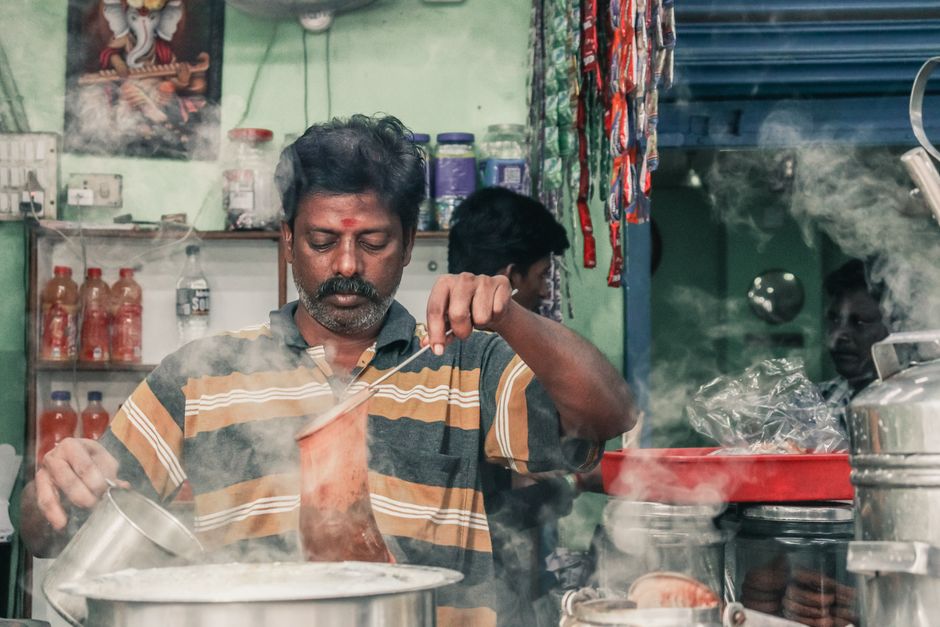
Overview
Karak Tea (with milk & sugar) belongs to the beverages group in this encyclopedia. We are not showing an impact rating or a suggested portion for this item, because the nutrition data behind it is not reliable enough to base either on. The sections below explain what is known and what is not. Values for this item are approximate — they were recovered from a lower-confidence source table and are a reasonable starting estimate rather than a precise figure. If a decision depends on the exact number, confirm with a nutrition label or your clinician.
Calories & Nutrition
Karak Tea (with milk & sugar) provides about 38 calories per 100 g. It contains roughly 0.3 g of carbohydrate per 100 g, which is the figure that matters most for blood sugar planning.
Carbohydrates & Blood Sugar
After a meal, carbohydrate is broken down to glucose and absorbed into the blood; insulin then helps move it into cells. Foods that release glucose slowly produce a smaller, steadier rise.
Normally we would explain how this particular item behaves from its carbohydrate figure. We are not doing that here, because the figure on record for Karak Tea (with milk & sugar) does not match what the product is, and reasoning from a number we do not trust would produce a confident-sounding answer that happens to be wrong.
What holds generally: how quickly a food raises blood glucose depends on how much carbohydrate it carries and how fast that carbohydrate becomes available — dissolved sugar in a drink arrives fastest, while fibre, fat and protein all slow the process down. Which of those applies here is a question the product's nutrition label can answer and this page cannot.
Counting carbs is easier when you have the right tool.
Suggested Serving Size
The table below shows the estimated impact and a sensible portion of Karak Tea (with milk & sugar) at each of the three diabetes control levels used throughout this encyclopedia. These are estimates derived from the food's carbohydrate content, fibre, category and physical form, together with established diabetes nutrition principles — not measurements of anyone's glucose response. Treat them as a starting point for planning rather than a fixed rule.
Foods are rated across three diabetes control categories — find the row that matches your HbA1c or fasting blood sugar:
| Control level | Safety rating | Suggested portion |
|---|---|---|
| Well-controlled HbA1c ≤ 6.5% (or fasting glucose 110–140 mg/dL) | See notes | Amount not specified |
| Moderately controlled HbA1c 6.6–8.5% (or fasting glucose 141–180 mg/dL) | See notes | Amount not specified |
| Poorly controlled HbA1c > 8.5% (or fasting glucose > 180 mg/dL) | See notes | Amount not specified |
The carbohydrate figure on record for this item is not reliable, so the portion calculator is switched off here. Use the number on the product's nutrition label instead.
Because no reliable carbohydrate figure is available for this item, the usual portion guidance does not apply:
If you are counting carbohydrate to work out a dose, take the figure from the product's nutrition label — not from this page. Nothing here is precise enough to dose from for this item.
Judge the portion from the label and from how you respond to it, and raise it with your care team if it is something you have regularly.
You know the portion. Now understand how it fits into your insulin decision.
Safety for Diabetics
We are not rating Karak Tea (with milk & sugar) here. The nutrition figures we hold for it do not hold together well enough to support a rating or a portion, and an invented one would be worse than none — especially if you count carbohydrate to work out an insulin dose.
That is a statement about our data, not about the food. Read the carbohydrate from the product's own nutrition label, and treat this page as background only. If this is something you eat or drink regularly, it is worth raising with your diabetes care team.
Group-level caution: Energy drinks (all kinds), regular AND diet sodas, 3-in-1 coffee, karak tea and instant coffee mixes are best avoided. Plain unsweetened coffee, plain tea and unsweetened carob are the safer choices in modest amounts.
Specialist notes
General caution (General caution)
What these drinks have in common is that the sugar is already dissolved, so it needs no digestion and arrives faster than the same amount eaten as food — and the sachet mixes add fat and creamer on top of it. Caffeine load is worth counting across the day as well, since several of these stack it. An unsweetened version of the same drink removes the glucose concern without removing the drink.
Recommendations may differ in individual cases — always follow your treating physician's instructions.
Blood Sugar & Insulin Considerations
Every food that raises blood sugar also has some bearing on insulin needs, whether that insulin comes from your own pancreas or an injection. Rather than memorising numbers for every food, many people find it easier to lean on a tool at the moment of eating. This is exactly the gap Flona is built for: it helps estimate the carbohydrate in a portion like the one above and supports your insulin decision — basal, rapid-acting, mixed or meal-based — without replacing the judgement of your physician or diabetes care team.
Controlling Your Blood Sugar with Karak Tea (with milk & sugar)
A few simple habits can change how Karak Tea (with milk & sugar) behaves in your blood sugar, without cutting it out of your diet entirely.
Unsweetened Karak Tea (with milk & sugar) carries negligible carbohydrate on its own; whatever gets stirred into it — sugar, honey, condensed milk — is usually the actual variable worth tracking.
Practical steps to keep your blood sugar steady
- Keep Karak Tea (with milk & sugar) unsweetened, or use a sugar-free sweetener, to avoid adding carbohydrate you don't need.
- If milk is added, an unsweetened option keeps things simple.
- Herbal teas without added sugar or honey need essentially no blood-sugar planning.
- A bottled or canned "tea" drink from a shop often has sugar already added, even when the label still just says "tea" — check the ingredients rather than assuming it matches a home-brewed cup.
- If you turn to Karak Tea (with milk & sugar) with honey for a cold or sore throat, a sugar-free honey substitute or plain lemon gives the same comfort without the added carbohydrate.
- Split a larger portion into two smaller sittings a few hours apart instead of drinking it all at once.
With Karak Tea (with milk & sugar) in particular, stacking two or three of these habits together (rather than relying on just one) is what tends to keep the post-meal rise manageable.
Scientific Explanation
Like coffee, the caffeine in Karak Tea (with milk & sugar) can prompt a modest, temporary release of stress hormones that nudges liver glucose output up slightly — a pathway separate from carbohydrate digestion, since plain tea itself has none to digest.
Tips
- Take the carbohydrate figure from the product's nutrition label rather than from this page.
- If you count carbohydrate for an insulin dose, do not use this page for this item.
- Check your glucose afterwards the first few times, so you learn your own response to it.
- Bring it up with your diabetes care team if you have it often.
- Keep an eye on total portion across the day — even gentler foods add up if drunk in large amounts.
Frequently Asked Questions
Is Karak Tea (with milk & sugar) safe for diabetics?
We cannot answer that responsibly for Karak Tea (with milk & sugar), because the nutrition data we hold for it is not reliable enough to rate. Rather than show a rating we do not stand behind, we show none. Use the product's own nutrition label, and speak to your diabetes care team about how it fits your plan.
How much Karak Tea (with milk & sugar) can a diabetic drink?
We are not able to suggest a portion for Karak Tea (with milk & sugar). The nutrition data behind it is not dependable enough to base one on, and an invented portion would be worse than none — particularly if you count carbohydrate to work out an insulin dose. Read the amount from the product label, and set a portion with your diabetes care team.
Does Karak Tea (with milk & sugar) raise blood sugar?
Almost certainly yes, but we cannot tell you by how much. The carbohydrate figure recorded for Karak Tea (with milk & sugar) is too low to match what the product is, so we are not repeating it here. Take the amount from the nutrition label rather than from this page.
How can I keep my blood sugar steady after drinking Karak Tea (with milk & sugar)?
Start from the product's own nutrition label rather than this page, check your glucose afterwards the first few times so you learn your own response, and take any recurring pattern to your diabetes care team.

Comments