
Introduction
A patient once came in for something unrelated and mentioned, almost as an aside, that he had been walking around for two days with a small stone caught in his shoe. He genuinely had not felt it. That single detail tells you most of what you need to know about why foot care gets its own conversation in diabetes, and it is worth a few minutes of your time.
What is actually happening to the nerves
Years of blood sugar running above target can damage the nerves that carry sensation to your feet, a problem called sensory neuropathy. What that damage actually feels like varies. Some people get tingling, numbness, or burning and shooting pains. Others, like the patient with the stone in his shoe, simply lose the ability to feel pain or temperature properly in that area, which sounds almost harmless until you realise what it actually means day to day.
Why numbness is more dangerous than pain
The real danger with reduced sensation is not the numbness itself. It is what it allows to happen unnoticed. A blister, a cut, a burn from a hot bath, a stone in a shoe, any of these can sit there quietly getting worse because the usual warning signal, pain, simply is not firing properly. Left alone, a minor injury like this can develop into a serious foot ulcer, and in the worst cases that can eventually threaten the limb itself.
Why blood flow matters here too
Above target blood sugar over years can also narrow the blood vessels supplying the legs and feet, reducing blood flow to the area. That combination, less feeling plus less blood flow, is exactly why small foot problems in diabetes can turn serious faster than they would anywhere else on the body, and why they need proper attention rather than a wait and see approach.
Turn what you just learned into a daily habit — Flona helps you apply it to real meals and doses.
The daily habit that actually protects you
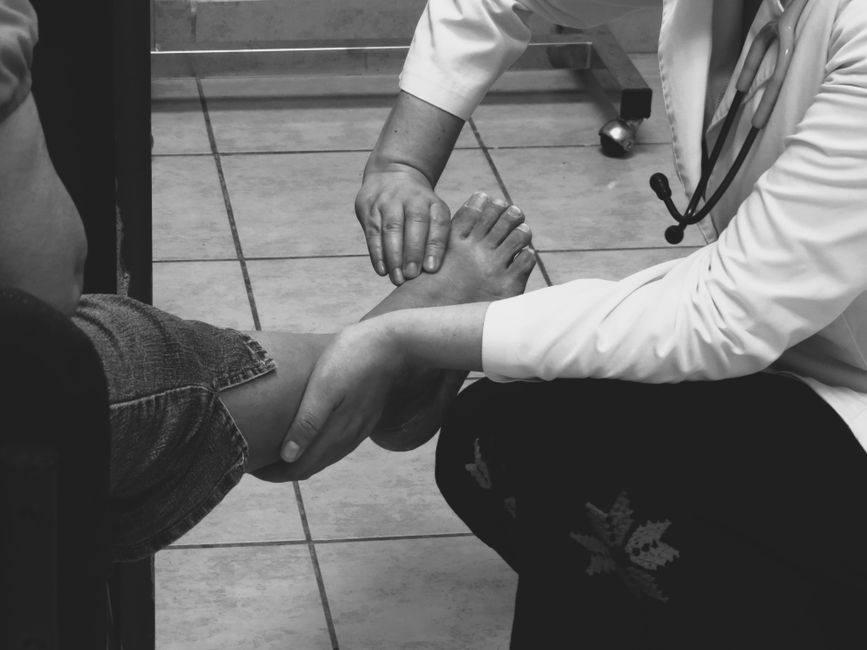
Looking at your feet every single day, properly, checking the soles and between the toes for anything you would not expect, redness, a cut, a blister, unusually dry or cracked skin, is the single most protective habit here. It takes under a minute. Pair that with a proper annual foot assessment from your diabetes team, checking your circulation and sensation specifically, and see a doctor promptly for anything that looks off rather than waiting to see if it settles on its own.
Key points
- Nerve damage from years of above target blood sugar can numb the feet, so pain stops working as a warning signal for injury.
- A blister, cut or burn can sit unnoticed and worsen into a serious ulcer specifically because the usual pain signal is not firing.
- Reduced blood flow to the feet often comes alongside the nerve damage, which is part of why small foot problems escalate faster here.
- A genuine daily look at your feet, plus an annual foot assessment from your team, is what actually catches problems while they are still small.


Comments