
Introduction
A parent asked me this last week, halfway through a diagnosis appointment, before I had even finished the sentence I was on. Is there a tablet he can take instead? I get the question every time and I get why. The answer is no. Not no because we have not looked, either. Insulin has been the treatment since two Canadians first used it on a dying boy in 1922, and a hundred years on there is still no pill, no diet and no supplement that stands in for it. The why is worth your time, because it makes the rest of the routine stop feeling random.
The factory is shut, not running slow
In type 1 the pancreas has quit making insulin. Not sputtering along at low output, the way it does in type 2. Actually shut. Insulin is the hormone that lets the glucose from your dinner cross into your cells instead of piling up in the blood, so once the supply is gone there is nothing in there to nudge, nothing to stimulate, no dose of anything that makes a shut-down organ start up again. Type 2 still has some factory left to lean on, which is why tablets can sometimes coax more out of it. Type 1 does not have that option, so the insulin has to come from outside, every day, by hand, and there is no version of this where that changes.
Why you cannot just swallow it
Insulin is a protein. Hold onto that, because it explains most of what follows. Your gut is very, very good at taking proteins apart. It does precisely that to the chicken in your sandwich and the beans in your soup, stripping them into fragments before any of it reaches the blood. Swallowed insulin meets the same fate. It gets taken to pieces in the stomach and the small intestine and turns up, if it turns up at all, as bits too broken to work. People have thrown a century and a genuinely large amount of money at armouring an insulin pill against digestion. A few have reached trials. None has landed as something you would swap a working injection for.
So it goes under the skin
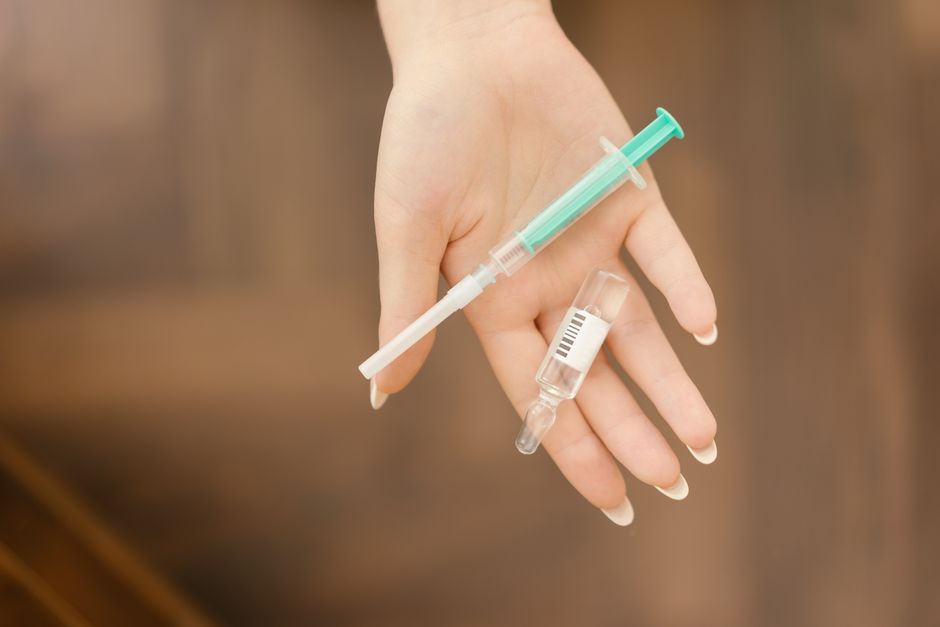
Since the gut is the problem, the insulin has to go around it. You put it into the layer of fat just under the skin, the subcutaneous layer, and from there it seeps into small blood vessels over the next while and reaches the body still intact. A pen does that. A syringe does that. The thin cannula taped to someone wearing a pump does the same job continuously. It is a fast, small thing once your hands have done it a few dozen times. I have taught teenagers who nearly fainted at the first one and were doing it over lunch at school inside a fortnight without looking up from their phone.
What treatment is actually copying
A working pancreas keeps a low trickle of insulin going around the clock, quietly cancelling out the sugar the liver leaks between meals and overnight, and then it fires a sharp burst the moment food lands. Insulin treatment is chasing that rhythm. Pushing your sugar down is only half of it, and the easy half. The regimens copy the two parts deliberately, a long flat insulin for the background and a fast one for meals, and the nearer they get to the real pattern the steadier your numbers run and the better your days go. Most people I talk to have never really thought about the background insulin at all, which is a shame, because the flat, boring one is quietly doing a lot of the actual work.
Turn what you just learned into a daily habit — Flona helps you apply it to real meals and doses.
Why you never just stop, even sick, even barely eating
Here is the one I lean on hardest with people, because getting it wrong is how a manageable week turns into an admission. Insulin is not optional on a bad day. Stop it because you feel awful, or because a stomach bug has flattened your appetite, and the body reads the missing insulin as a crisis and starts burning fat hard for fuel, and that fat-burning tips acids called ketones into the blood. Let it run and you are heading for diabetic ketoacidosis, which puts people in intensive care and still kills some. So illness flips the instinct on its head. The insulin keeps going, the dose often goes up rather than down, and every person with type 1 gets sick-day rules early for exactly this reason. A vomiting bug is one of the more common ways someone ends up in the emergency department a day too late.
It becomes the background of a normal life
Sitting with the idea that this is now permanent takes a bit. I will not pretend the first month is nothing. What tends to happen, though, is that the pen or the pump slides from being a whole production down to something you barely register, somewhere near the level of grabbing your keys on the way out. Your team builds the regimen around your actual life rather than the reverse, your shifts, your appetite, whether you are a late-dinner person or up running at six, and the insulin gets shaped to fit that. I have patients who fly, patients who dive, one who competed in strongman. The insulin came along to all of it. It just stopped being the thing they thought about first.
Key points
- The pancreas in type 1 makes essentially no insulin, so unlike type 2 there is nothing left to stimulate, which is why insulin has to be replaced.
- You cannot swallow it. Insulin is a protein and the gut digests it into useless fragments, the same way it breaks down the protein in food.
- It goes into the fat just under the skin, where it seeps into small blood vessels and reaches the blood still working.
- Good treatment copies a real pancreas, a steady background insulin plus fast bursts at meals, not just a shove downward when sugar is high.
- You do not stop insulin during illness. If anything you need more, because stopping it risks ketones building up and tipping into DKA.


Comments