
Introduction
A patient once told me she had eaten nothing since dinner and could not understand why her sugar was higher at seven in the morning than it had been at midnight. She was doing everything right and felt like she was failing anyway. What she was actually seeing has a name, the dawn phenomenon, and once you understand it, that particular kind of guilt tends to lift fairly quickly.
What is actually going on
In the hours before you wake, usually somewhere between four and eight in the morning, your body releases a cluster of hormones, cortisol, growth hormone, adrenaline and glucagon among them, all designed to get you ready for the day ahead. They push the liver to release stored glucose and, at the same time, make your cells temporarily a little less responsive to insulin. In someone without diabetes, the body's own insulin quietly rises to match and nothing changes on the outside. In diabetes, particularly where insulin resistance is already part of the picture or insulin output is limited, that compensation cannot quite keep up, and a real, measurable rise shows up on the meter.
Why it is worth knowing about
This one matters because it hides in plain sight. It can quietly push HbA1c higher even in someone doing everything asked of them with food and treatment, and because nothing about it feels obviously wrong at the time, it is very easy to blame the previous night's dinner when the real driver was simply the clock.
Telling it apart from a night-time hypo rebound
There is one test that settles it, a blood sugar check around two or three in the morning. In the dawn phenomenon, that middle-of-the-night reading is normal or already a bit high, and it climbs further by morning as the hormone surge kicks in. In what is called the Somogyi effect, the two or three a.m. reading is actually very low, a hypo you likely slept through, and the high morning number is your body's rebound overcorrection. The fix is different depending on which one it is. A true Somogyi pattern often calls for less insulin overnight or a small snack at bedtime, not more insulin, which would only make a hidden hypo worse.
Turn what you just learned into a daily habit — Flona helps you apply it to real meals and doses.
What actually helps
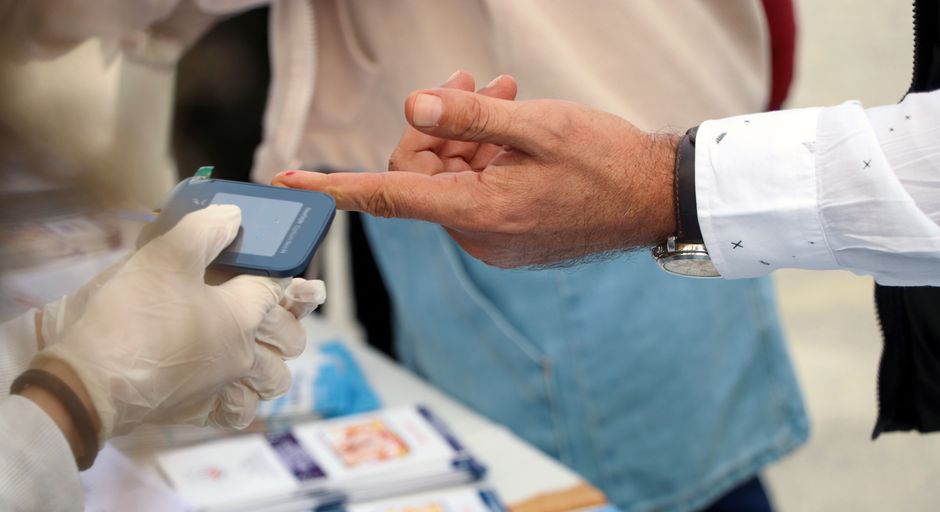
For type 1, this is often a conversation with your team about the timing or type of your basal insulin, sometimes a steadier, longer-acting option makes a real difference. A lighter evening meal helps too, less in the way of simple carbohydrate, and steering away from a heavy, late dinner. Regular exercise earns its keep here as well, since it improves how sensitive your body is to insulin the next day. And actually watching the pattern, whether with a sensor or a couple of deliberate night-time checks, is what tells you and your team whether this is even what is happening before you change anything.



Comments