
Introduction
I get asked constantly whether a pump is simply the better option, and my honest answer disappoints people who want a clean yes. It is not better or worse than injections in any absolute sense. It is a different tool that suits some lives brilliantly and others not especially, and understanding how it actually works is what lets you and your team make a real decision rather than a guess.
What is actually attached to you
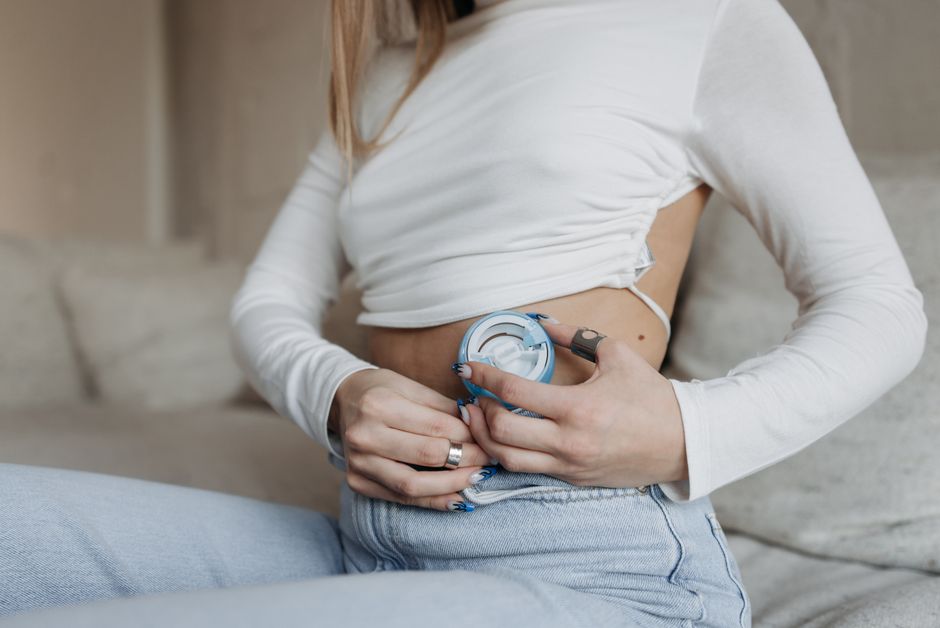
A pump is a small computerised device holding a reservoir of rapid-acting insulin only, connected by thin tubing to a soft cannula sitting just under the skin, usually in the abdomen or thigh. That cannula and its tubing get changed every two to three days. The whole point of the setup is that, unlike an injection which delivers one dose at one moment, the pump is quietly dripping in tiny amounts of insulin around the clock, all day and all night, following whatever schedule you and your team have programmed.
How it plays both basal and bolus at once
Instead of a separate long-acting injection, the pump fakes basal cover by trickling small amounts of rapid-acting insulin continuously, following a preset hourly pattern called a basal rate that can shift across the day and night to match your actual needs. At meals, or to correct a high reading, you tell the pump, or a connected controller, to deliver a bolus dose, worked out from the carbohydrate you are about to eat in much the same way you would with an injection, whether that is porridge in the morning or salmon and vegetables at dinner.
A pump does not let you stop counting carbs
If anything, it makes accurate counting pay off more, because bolus doses can be fine-tuned in far smaller steps than a pen ever allows. Most pumps have a built-in calculator that suggests a dose once you have entered the carbohydrate and your current blood sugar, but that suggestion is only as good as the carbohydrate number you give it, a jacket potato, some chickpeas, a slice of bread, so the counting itself is still entirely on you.
Where the real flexibility shows up
This is the part people usually come to a pump for. Because insulin arrives in small, adjustable amounts rather than fixed injected doses, you can temporarily raise or lower the basal rate around exercise, illness, or a genuinely irregular day, and bolus doses can be stretched or split for a meal that digests slowly. Eating at odd hours, sleeping in, fine-tuning around a training session, all of that bends far more easily than it would with a fixed long-acting injection sitting in the background.
Turn what you just learned into a daily habit — Flona helps you apply it to real meals and doses.
What it asks of you in return
None of this comes free. You are wearing a device attached to your body almost constantly, which some people find genuinely intrusive, and there is a real learning curve, changing the cannula, troubleshooting when something goes wrong. Because the reservoir holds only rapid-acting insulin delivered in small frequent amounts, any interruption, a blocked cannula, an empty reservoir, a kink in the tubing, can stop insulin delivery within a worryingly short window, and there is no longer-acting insulin already in your system to quietly cover the gap.
Why you always keep a backup plan
Because a pump failure bites so fast, and because only rapid-acting insulin is involved, ketones can build up quicker than they would on an injection routine if a problem goes unnoticed, and that raises real risk of diabetic ketoacidosis. This is exactly why anyone on a pump is taught to always keep backup pens or syringes and some long-acting insulin at home, to check for pump trouble the moment blood sugar runs unexpectedly high, and to know how to switch back to injections without hesitating. The pump is genuinely a powerful tool. It is only as safe as the backup plan sitting behind it.
Key points
- A pump holds only rapid-acting insulin and delivers it continuously through a cannula changed every two to three days.
- It fakes basal cover with a programmable hourly rate and handles meals and corrections through bolus doses you still calculate from carbs.
- The flexibility shines around exercise, illness and irregular schedules, adjusting far more easily than a fixed long-acting injection.
- Because only rapid-acting insulin is used, a pump failure can lead to ketones surprisingly fast, which is why backup pens are non-negotiable.




Comments