

Introduction
For the first few weeks I dosed my insulin by vibe. A plate looked about the same as yesterday, so I took about the same as yesterday, and then I spent the afternoon wondering why I was high or low with no idea which. Carb counting is the thing that ended that, and I resisted it because it sounded like homework. It turns out to be less maths than it looks and more useful than anyone managed to convince me of at the start, so let me try to convince you, because it is the closest thing type 1 has to a superpower.
Why carbs, and not the rest of the plate
The reason we count carbohydrate and mostly ignore the protein and fat is simple once someone says it out loud. Carbohydrate is the part of food that turns into glucose and pushes your blood sugar up, quite quickly and quite predictably. Protein and fat nudge it too, slower and less, but carbs are the big lever, and they are the one your mealtime insulin is there to match. So the game is not counting calories and it is not being good or bad. It is working out roughly how much carbohydrate is on the plate, so the insulin you take lines up with the sugar that is about to arrive.
Where the carbs actually hide
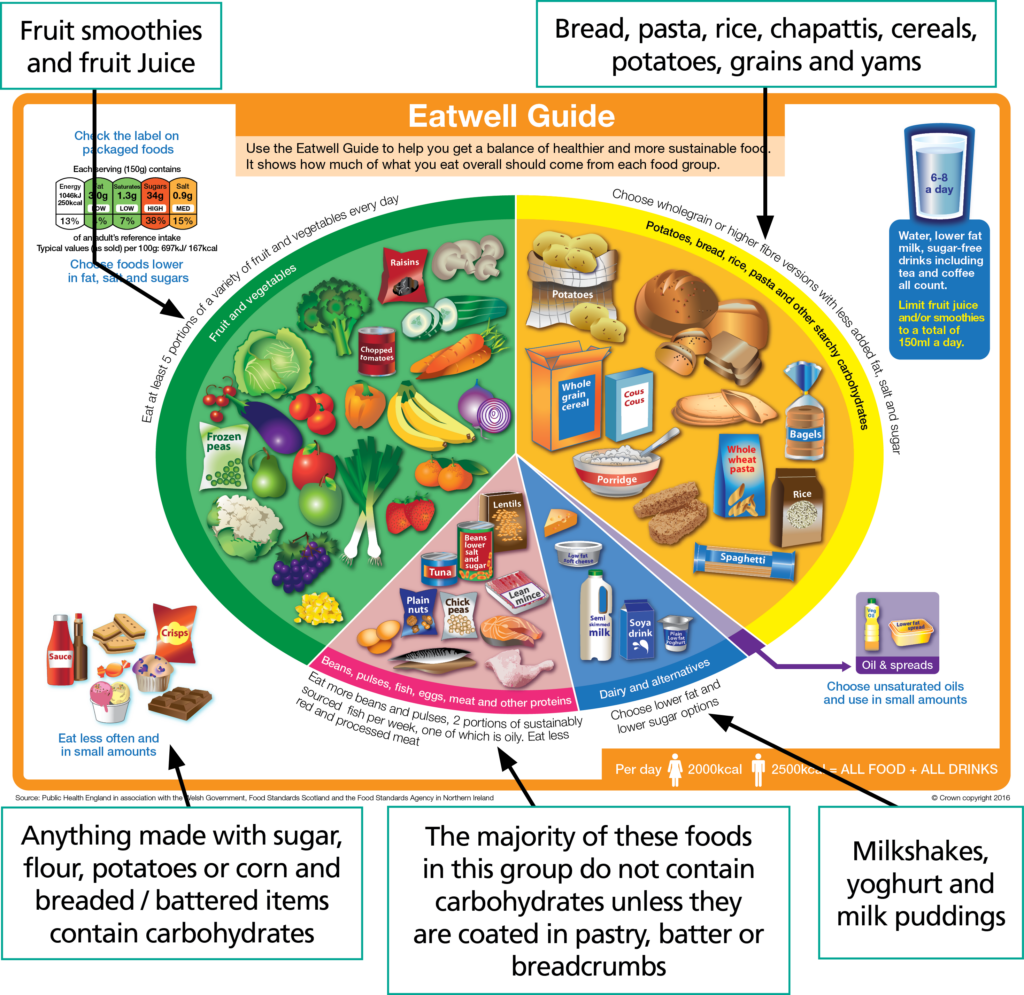
The obvious ones you will get straight away. Bread, rice, pasta, potatoes, breakfast cereal, anything sugary. The ones that trip people up early are the quieter carbs, the milk in a latte, the fruit you thought was a free pass, the beans in a stew, the ketchup, the glass of juice that hits like a truck. Vegetables that grow above the ground are mostly so low you can wave them through. Meat, fish, eggs and cheese are essentially carb-free and you can stop worrying about them. It takes a week or two of actually looking before your eye starts to sort a plate into the bits that matter and the bits that do not.
Reading a label without overthinking it
A packet does most of the work for you if you know where to look, and the number you want is total carbohydrate per hundred grams, or per portion if the portion is realistic. Ignore the sugar line sitting underneath it, which confuses everyone at first. That sugar figure is already counted inside the total carbohydrate, it is not an extra, and for dosing insulin it is the total that matters, sugars and starches together. Weigh the food if you are somewhere you can, at least while you are learning, because the gap between a guessed portion of pasta and a weighed one is enormous and it shows up an hour later on your meter.
Turn what you just learned into a daily habit — Flona helps you apply it to real meals and doses.
Turning carbs into a dose
This is the bit that feels like alchemy until it does not. You and your team work out your ratio, which is how many grams of carbohydrate one unit of your mealtime insulin covers, and it is personal, so mine is no use to you. Say yours is one unit for every ten grams. A meal you have counted at fifty grams of carb then needs five units, give or take a correction if you are already running high. It genuinely is that mechanical once the ratio is set. The freedom in it is the point. You are no longer tied to fixed meals at fixed times, because you can dose for whatever is actually in front of you, a big dinner or a small one or a slice of birthday cake.
Getting it wrong is part of it
Nobody counts perfectly, and I want to say that clearly because the precision can feel like pressure. You will misjudge a takeaway, especially a greasy one where the fat drags the whole thing out and the spike turns up late. You will forget the carbs in a sauce. Your numbers will sometimes be off and it will not be because you failed, it will be because food is messy and bodies are not calculators. The counting still puts you miles ahead of guessing, because when you are off you usually know why, and next time you adjust. Tools that estimate the carbs in a meal from a photo or a database can take some of the load off, but the instinct you build by doing it yourself is the thing that lasts.
Key points
- Carbohydrate is the nutrient that raises blood sugar most, and matching mealtime insulin to it is what carb counting is for. Protein and fat matter far less.
- Watch the hidden carbs, like milk, fruit, juice, beans and sauces. Above-ground veg, meat, fish, eggs and cheese are barely worth counting.
- On a label, use total carbohydrate, not the sugar line underneath it. The sugars are already inside the total.
- Your carb-to-insulin ratio is personal. Once your team sets it, a counted meal turns into a dose with simple arithmetic.
- You will get it wrong sometimes, especially with fatty takeaways. Counting still beats guessing because you usually learn why you were off.


Comments